


A day at the beach with children doesn't have to mean complicated planning. At the coast, play happens naturally. Sand, sea, and wind create an environment that constantly changes and automatically gets children moving. With a few simple ideas, you can help jumpstart that play. After that, nature takes over.
Children and the beach
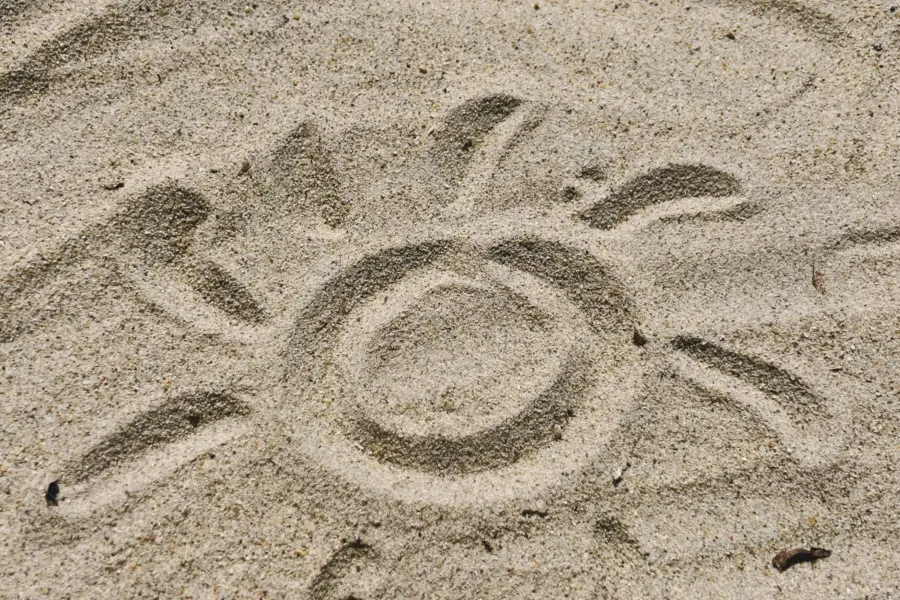
Beach activities work so well for children because they bring multiple elements together simultaneously. On the beach, children are in constant motion: they run over wet sand, dig pits, climb up dunes, and jump back down. At the same time, all their senses are engaged. They feel the sand between their hands or toes, hear the sea and the wind, and see how the landscape keeps shifting.
What distinguishes the beach from many other play areas is that there is no fixed end goal. Children build something, tear it down, and start again. They discover, experiment, and constantly adapt their play. It is precisely this open-ended character that ensures they stay engaged longer and don't get bored as quickly.
This combination of movement, sensory stimuli, and free play aligns directly with what children need for their development. In a dynamic environment like the beach, creativity, independence, and motor skills are naturally stimulated. This makes playing by the sea not only fun but also valuable without needing to be organized.
10 beach activities with children
1. Dig a water channel to the sea
A simple hole quickly turns into a project that children become completely absorbed in. By digging a channel towards the sea, a goal is created: making water flow. This rarely succeeds on the first try, and that’s exactly what makes it interesting. Children keep adjusting, deepening, and trying again until the water finally breaks through.
- Stimulates problem-solving thinking
- Lets children experiment with water and flow
- Remains interesting through trial & error
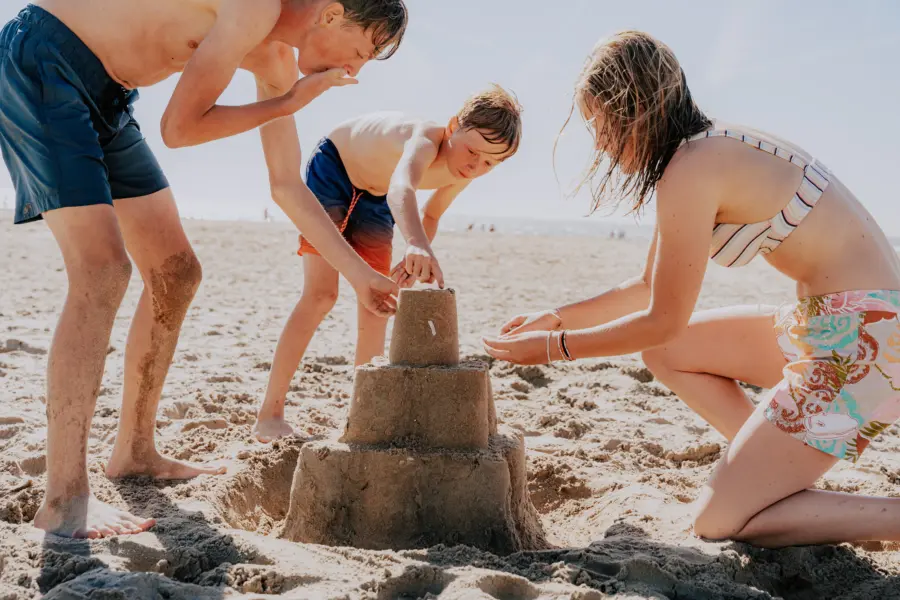
2. Build a sand village with roads and bridges
While a sandcastle is often finished quickly, a sand village keeps growing. Children start small but naturally add roads, tunnels, and bridges. The game develops step by step and becomes increasingly complex the longer they work on it. Of course, tools or decorations like buckets, molds, or shells can be used. Who is the most creative sandcastle builder?
- Stimulates creativity and collaboration
- Provides long-lasting play through expansions
- Gives children ownership over what they build
3. Shell hunting with a mission
Without direction, searching for shells is often over quickly. With a small mission, it turns into a focused activity. Children look more closely and search more consciously for differences in shape, color, and size. Maybe they’ll find something truly special!
- Activates observation and focus
- Easily adaptable by age
- Turns searching into a game with a goal
4. Create a beach obstacle course
The beach naturally offers variety: wet sand, dry sand, and elevation changes. By naming a few elements, an obstacle course is created that children can expand themselves. Every round becomes different and more challenging. And how interesting is the phenomenon of ebb and flow?
- Combines running, jumping, and balancing
- Adapts to the moment and the terrain
- Stimulates motor skills and energy expenditure
5. Kite flying by the sea
The wind on the North Holland coast makes kite flying possible almost all the time. Children immediately experience the effect of their movements, making the activity active and educational. Small adjustments have an immediate effect.
- Direct interaction with wind and movement
- Suitable for various ages
- Combines play and learning without explanation
6. Play ‘What has changed?’
This game slows down the pace and increases attention. By looking closely first and then changing something, children are forced to remember details and compare
- Trains concentration and memory
- Works well as a moment of rest
- Makes children more aware of their surroundings
7. Beachcombing with a story
Along the tide line, there is often more than you think. By combining beachcombing with a story, it becomes more creative. Children start thinking about the origin and function of what they find. Fun holiday tip: go "korren" (fish netting) in the sea with the campsite guide!
- Stimulates fantasy and imagination
- Makes collecting more meaningful
- Taps into natural curiosity
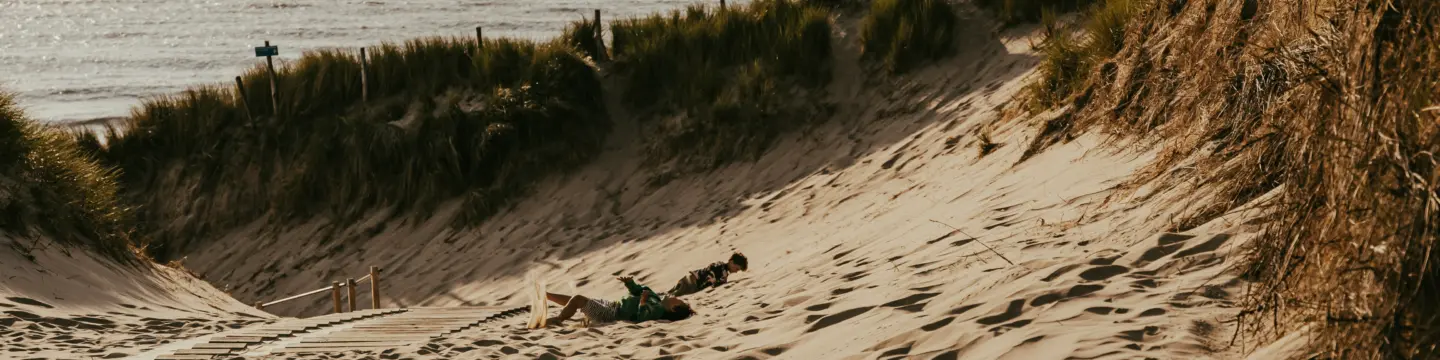
8. Running and rolling on a dune slope
The edge of the dunes adds an extra dimension to the beach. A slope invites movement: running up, rolling down, and trying again. Children test their boundaries without being directed.
- Strengthens balance and coordination
- Provides intensive physical activity
- Works without explanation or preparation
9. Water and mud play
With just sand and water, the most intensive play emerges. Children build, test, and adapt. It is free play without fixed rules, allowing them to keep experimenting. Challenge the kids to use absolutely nothing but their hands, sand, and water: drip castles are super cool!
- Stimulates creative and technical thinking
- Ensures long-term engagement
- Works with minimal resources
10. Evening on the beach
At the end of the day, the beach changes completely. The light, the peace, and the sounds make the same place feel different. Activities naturally gain more excitement and atmosphere. Which stars (constellations) can you see? Do you hear that bird? You might even see bats!
- Provides new play stimuli
- Utilizes atmosphere and environment
- Ideal for quiet, shared moments
Beach activities by age
2–5 years
- Discovery and sensory feel are central
- Simple tasks work best
- Repetition is important
6–11 years
- Building, collecting, and missions
- Play with a goal works longer
- Collaboration happens naturally
11–14 years
- Need for challenge and independence/self-direction
- One teenager might like physical and adventurous activities
- Another might prefer socializing or peace and relaxation
This structure follows how play develops by age: from discovery to building and independent exploration.
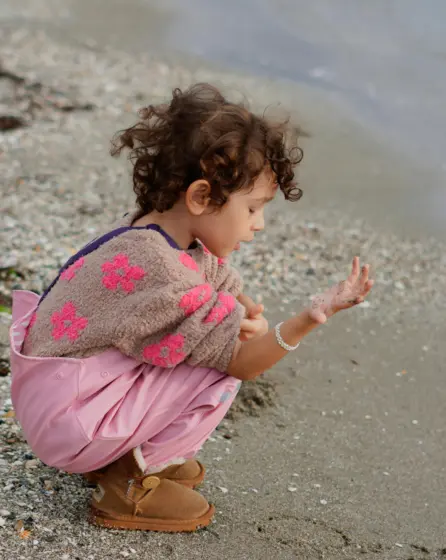
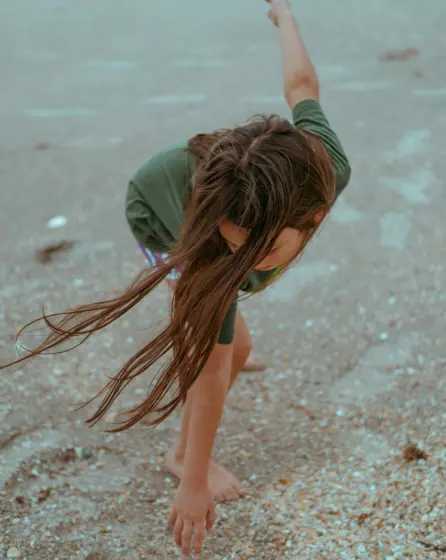
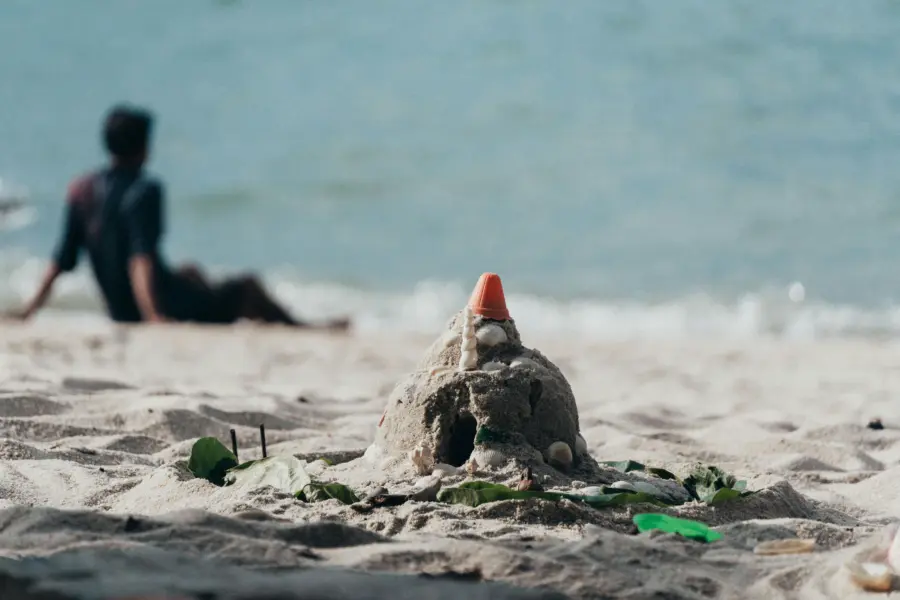
How do you keep children busy on the beach without toys?
The power of beach activities lies in simplicity. Children need very little if the environment is right.
- Give one clear starting point
- Ask open questions instead of giving commands
- Intentionally step back during play
- Avoid over-structuring
Open play ensures that children stay independently occupied longer and get more out of their surroundings.
Why the beach at Bakkum is ideal for this
The beach of Castricum aan Zee combines space, dunes, and sea. As a result, the play environment is constantly changing. This variation ensures that children naturally come up with ideas and need less guidance. The environment does the work. Do you fancy a beach holiday?
Frequently Asked Questions
What can you do with children on the beach?
Building sand villages, searching for shells, digging channels, and beachcombing are activities that almost always work.
How do you entertain children on the beach without toys?
By giving a small prompt and then letting go. The environment takes over.
Why do children play longer on the beach?
Because the environment keeps changing and continuously offers new reasons to play.
Sources
Gray, P. (2013). Free to Learn
Lester & Russell (2010). Children’s right to play